
Summary of letter dated 10th August 1559
Mary informs Kilravock of a recent peace agreement near Leith, without her consultation, between the Duke, Monsieur D’Oysel and the Earl of Huntly on one side, and the Lords of the Congregation (the Protestant leaders) on the other. She asks Kilravock to be prepared to support her if conflict begins, while stressing she will act only in self-defence. She also requests written confirmation of his loyalty and readiness to assist her.
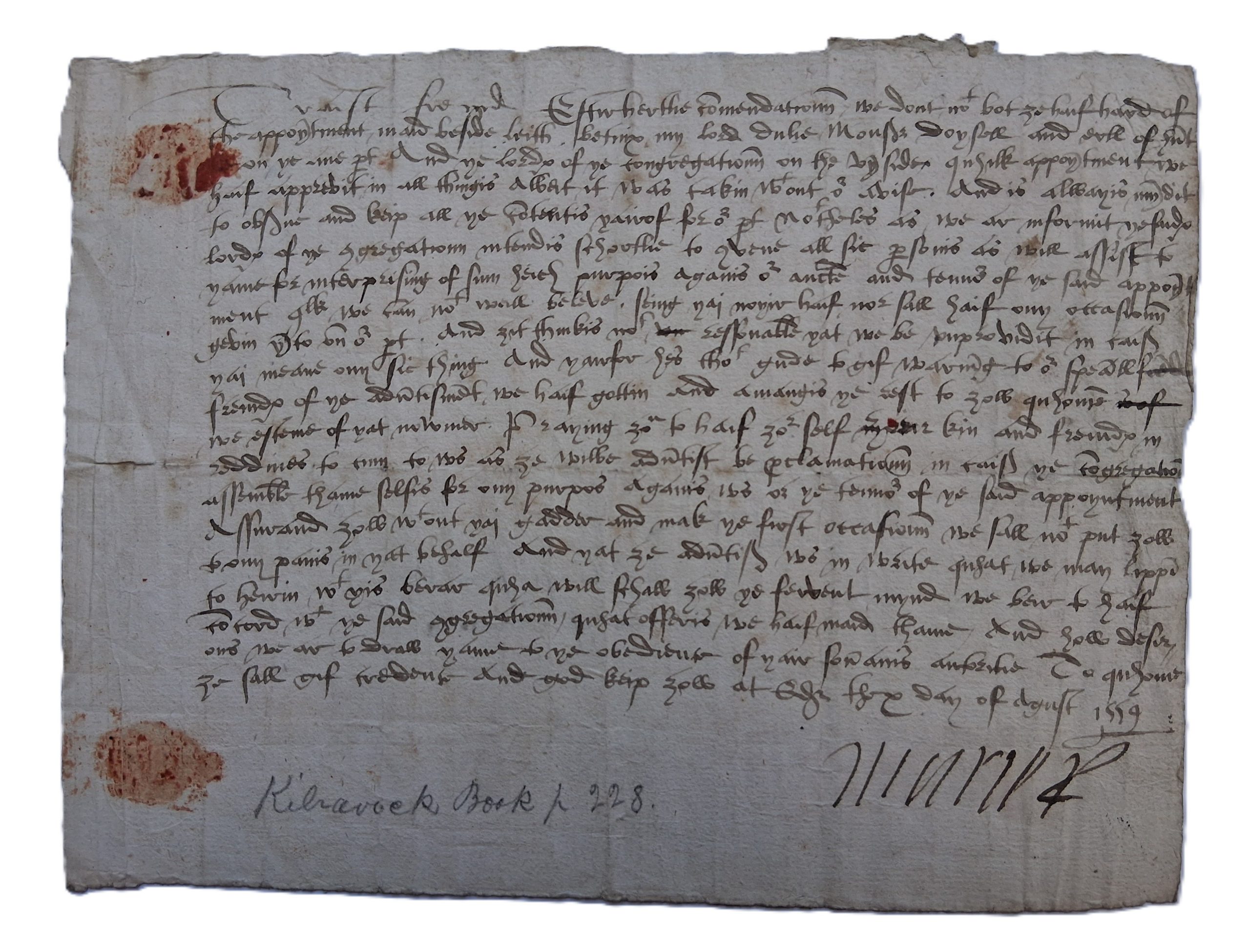
Historical Context
By August 1559, Scotland was divided by both religion and politics, with growing opposition to Mary de Guise’s Catholic government and its French influences.
The main challenge came from the Protestant nobles known as the Lords of the Congregation, a group including powerful Scottish lords who opposed Mary’s policies and supported religious reform. Their movement gained strength from Protestant preachers such as John Knox, whose sermons encouraged resistance to Catholic authority.
In 1559, open conflict broke out between the Regent’s supporters and the Protestant Lords. The Lords seized several important towns, including Perth and Edinburgh, while Mary relied heavily on French troops stationed at Leith under the command of Monsieur D’Oysel. Many Scottish nobles feared that increasing French military involvement threatened Scotland’s independence and Protestant interests.
The “peace” referred to in the letter was one of several temporary truces negotiated during the crisis. These agreements were fragile and often made without full trust between the two sides. Mary’s complaint that she had not been fully consulted reflects the weakening of her authority and the increasingly independent actions of Scottish nobles attempting to manage the conflict themselves.
At this stage, George Gordon, 4th Earl of Huntly and other nobles still generally supported the Regent, but loyalties across Scotland were becoming uncertain. Mary therefore wrote to Kilravock seeking reassurance of his loyalty and military support in case fighting resumed. Her emphasis that she would act only in self-defence was politically important, as she aimed to present herself as defending lawful royal authority rather than provoking civil war.
This letter reflects the tense and unstable atmosphere of Scotland in 1559: a kingdom divided by religion, suspicion of French influence, and weakening confidence in the Regent’s rule. Within a year, the conflict would lead to English intervention, the withdrawal of French forces, and the death of Mary of Guise in June 1560. James VI became King, but Scotland was governed by regents. In August 1560, the Scottish Parliament officially adopted the Protestant Reformation, marking a major break from Catholic authority in Scotland.
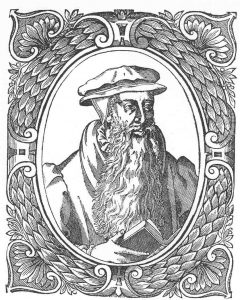
Portait of John Knox from Theodore Beza's Icones from 1580
Image https://en.wikipedia.org/wiki/John_Knox#/media/File:Knoxbezaicones.jpg
This post is part of the Kilravock Stories Exhibition, now on display at Nairn Museum until 25th September 2026. Explore the history of Clan Rose, Kilravock Castle, and the rich heritage of the Scottish Highlands.
References
For a full transcription of this letter see page 228 of A genealogical deduction of the family of Rose of Kilravock : Spalding Club (Aberdeen, Scotland) : Free Download, Borrow, and Streaming : Internet Archive
https://tudortimes.co.uk/people/regent-moray-life-story/the-lords-of-the-congregation
https://scottishhistorysociety.com/the-scottish-reformation-c-1525-1560/