In wartime, the delivery of mail to both soldiers serving on the frontlines and those captured in Prisoner of War (POW) camps were vital in keeping the fight alive.
Private William Ross was in the Queen’s Own Cameron Highlands in the 51st Highland Division during World War II. The 51st Highland division was deployed in January 1940 as part of the British Expeditionary Forces landed in Le Harve in Northern France. The 51st Highland Division fought in the Battle for France from their arrival in January to the June, in which they were the last line of defence between the attacking German forces and the retreating allied armies. Many historians argue that the 51st Highland Division was ‘sacrificed’ by the British Government to allow the rest of the Allied forces to escape at Dunkirk. The 51st Highland Division fought ot the end but on 12th June 1940, 100,000 men from the division were taken captive at Saint Valery-en-Caux. Including Private William Ross.
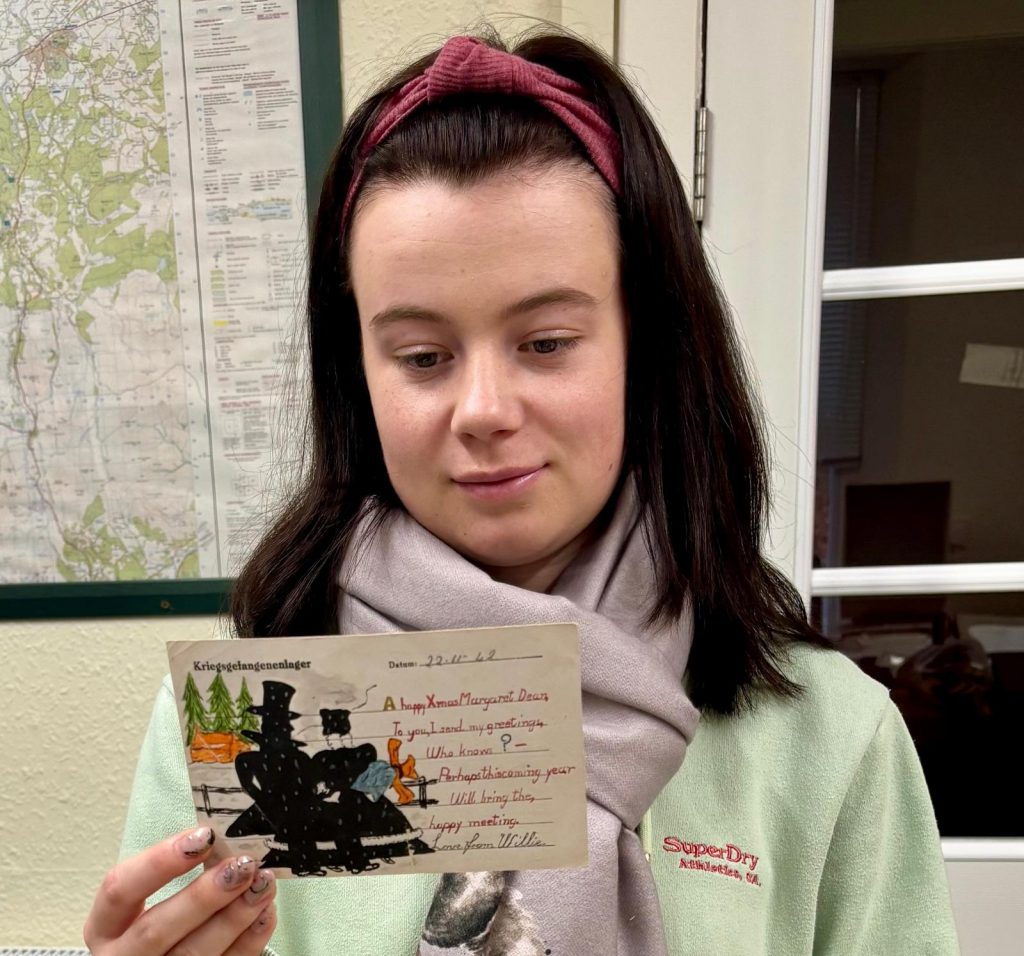
Collections Assistant, Lucy Dickson, examining the postcards of from Private William Ross
On 12 June 1940, many Scottish families lost their loved ones for over five years, we can only imagine the impact of such a loss. These men were either forced to march or were transported to POW camps across Europe, William ended up in one of the largest German POW Camps, Stalag XXI D. Stalag XXI D was located in Poznan in Poland, William found himself in a foreign country, having to navigate a different language, environment and accept his new status as a prisoner of war. The situation for these men and their families was bleak, with their only means of communication in the form of letters and postcards.
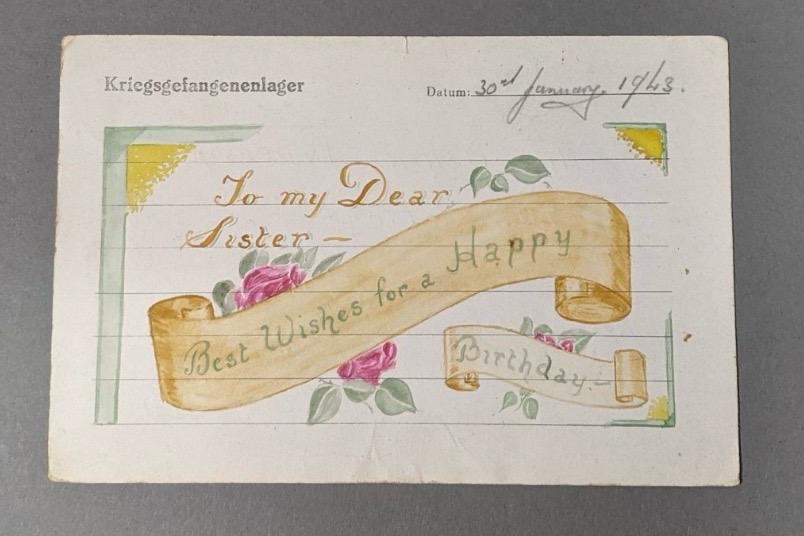
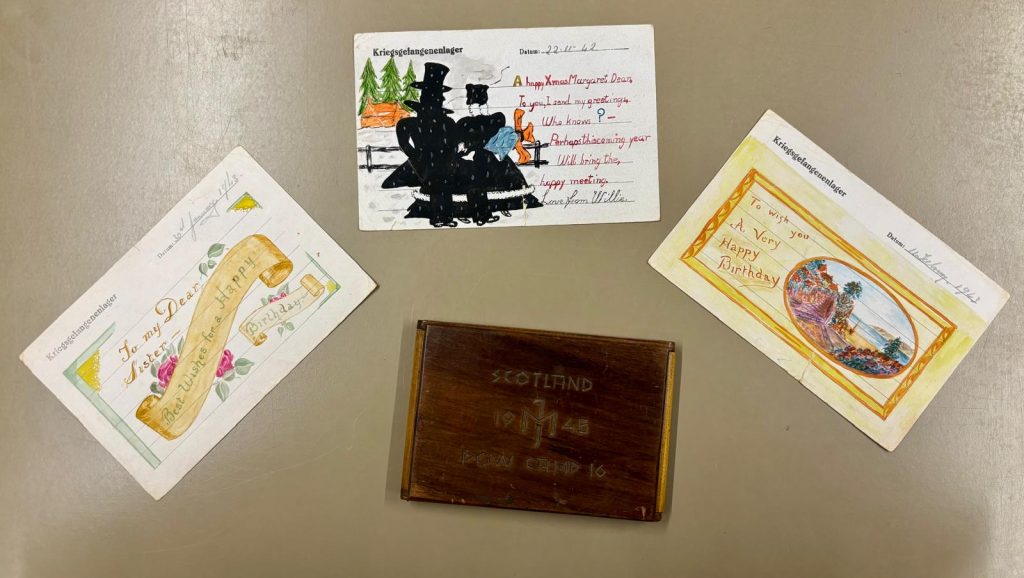
During his time in Stalag XXI D, William wrote loving postcards to his sister ‘Miss M.H.R Anderson’ back home in Nairn, tucked away in the Highlands of Scotland. Each of William’s postcards feature beautiful paintings all containing flowers and greenery. Perhaps providing William with an element of escapism transporting himself back to his home in the rural landscape of Nairnshire.
A Bright Birthday Postcard from Private William Ross to his sister, Margaret Anderson
Letters and postcards provided something real for people to hold onto on both sides of the English channel. For prisoners of war letters were a vital boost to morale; to encourage men to keep going, so that they could one day return to their families. For families back home, going months without knowing whether their loved ones were still alive, the arrival of a letter gave an overwhelming feeling of relief and hope for their safe return.
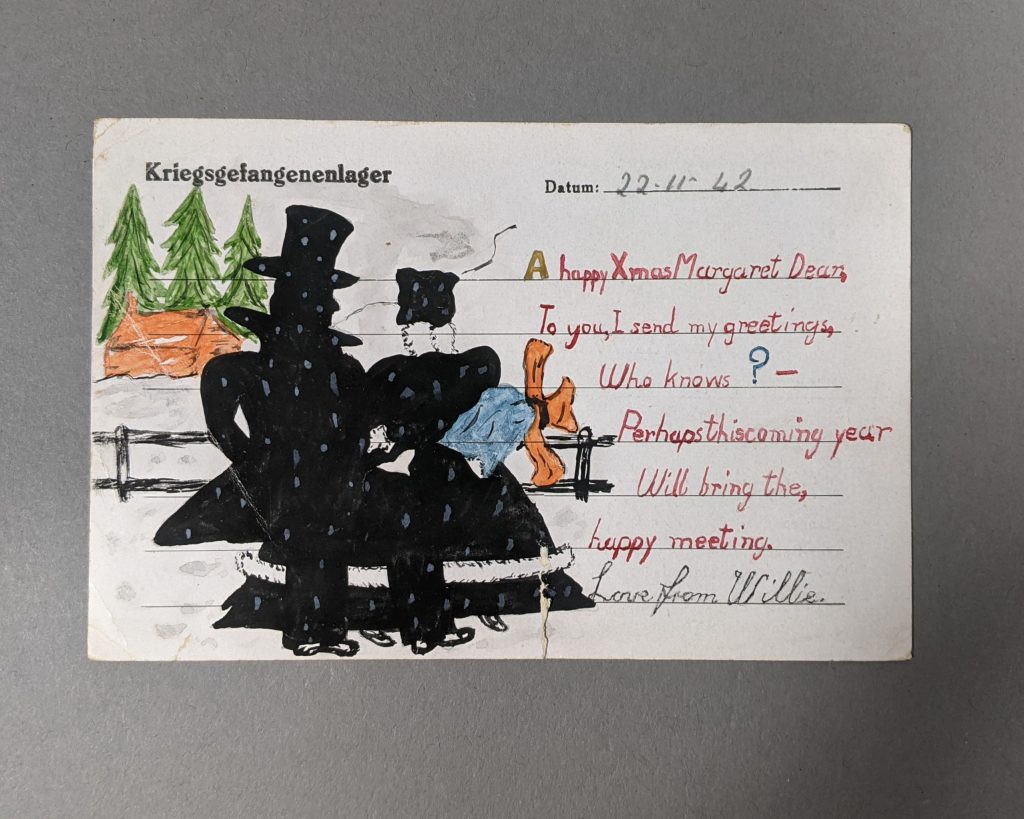
Like many men in captivity William keenly felt the absence of his family during yearly celebrations. His Christmas postcard depicts a very Dickensian festive scene, writing to the side that he hopes to be re-united his sister the following year. William would have to wait until April 1945 to be reunited with his family again after nearly five years in a POW camp.
A Jolly Christmas Postcard from Private William Ross to his sister, Margaret Anderson
Within POW camps, cigarettes often acted as a form of currency to be bartered in exchange for food or additional luxuries. In letters home, soldiers could request food, clothing, medical supplies and often cigarettes to used in this internal bartering system. Upon leaving the camp William was gifted a hand-made cigarette box. The box was inscribed ‘SCOTLAND 19 JM 45, POW CAMP 16’. ‘JM’ is likely the initials of William’s friend who gifted him this beautifully made token. You can view this box in more detail by following this link.
Soldiers and their families who endured years of heartbreak and separation during World War II found solace in the only way they could, in keeping lines of letters between them flowing.
It is through their sacrifice that we can live today.
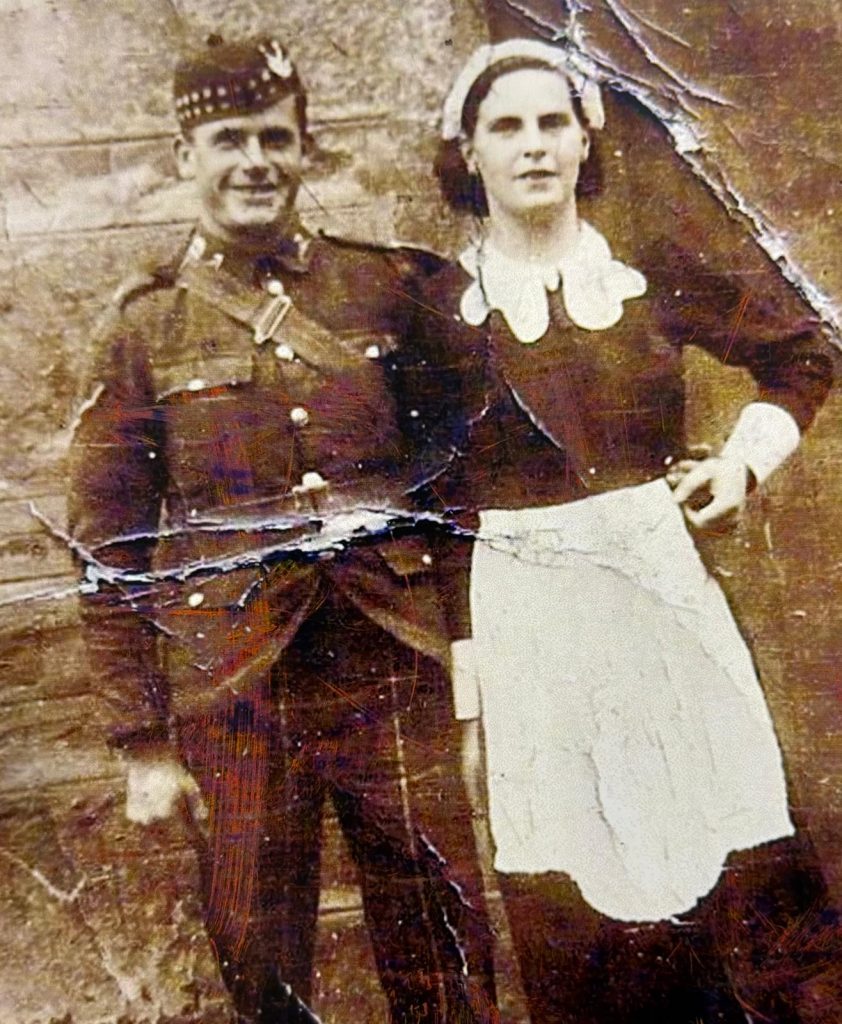
Private William Ross with Margaret Anderson, his sister. Likely at the start of the Second World War